AREA
PRODUTO
PROJECT
BY DESIGN STUDIO
ROLE
PRODUCT DESIGNER PRINCIPAL
YEAR
2023
Usability Test - Workflow
about.
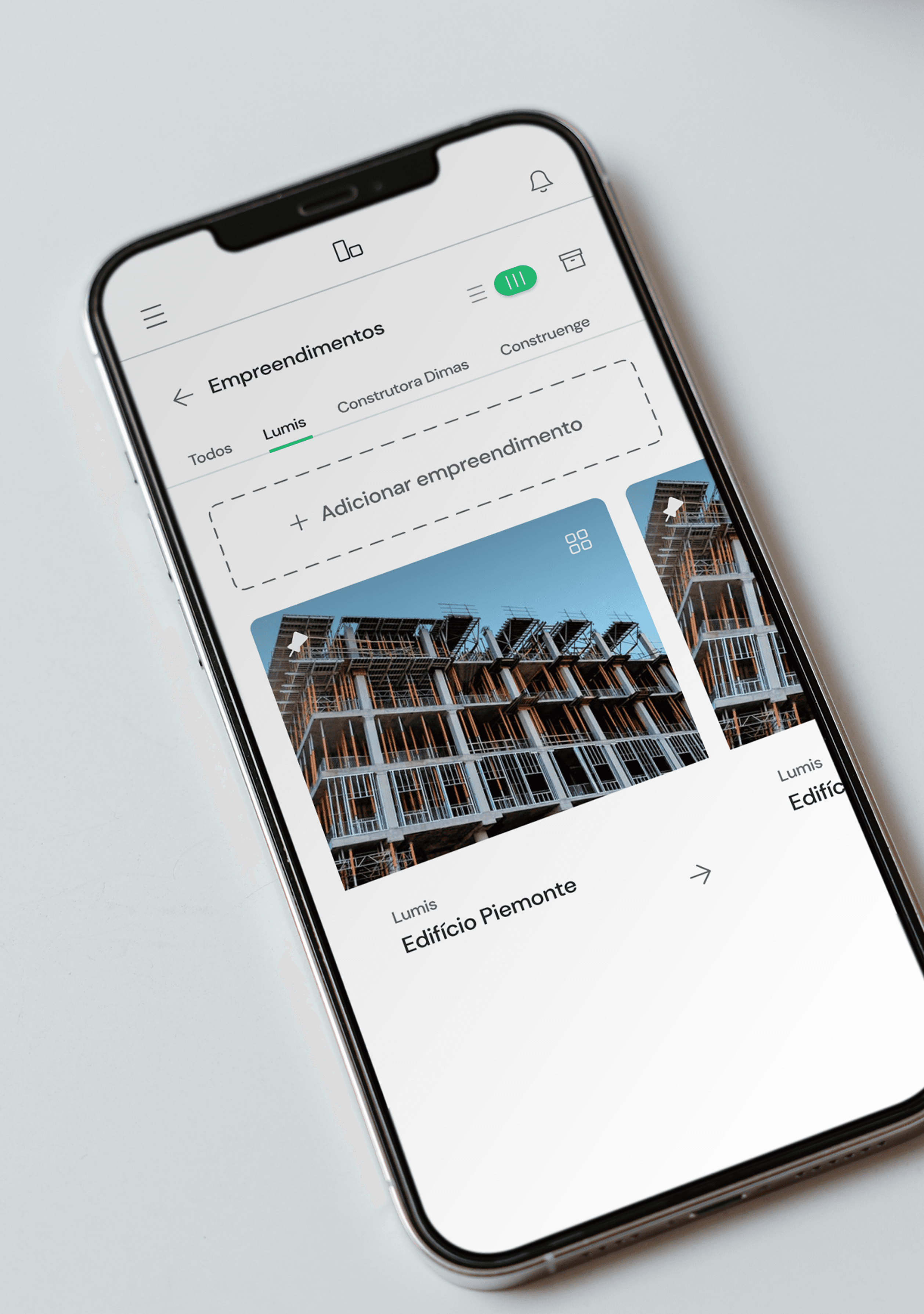
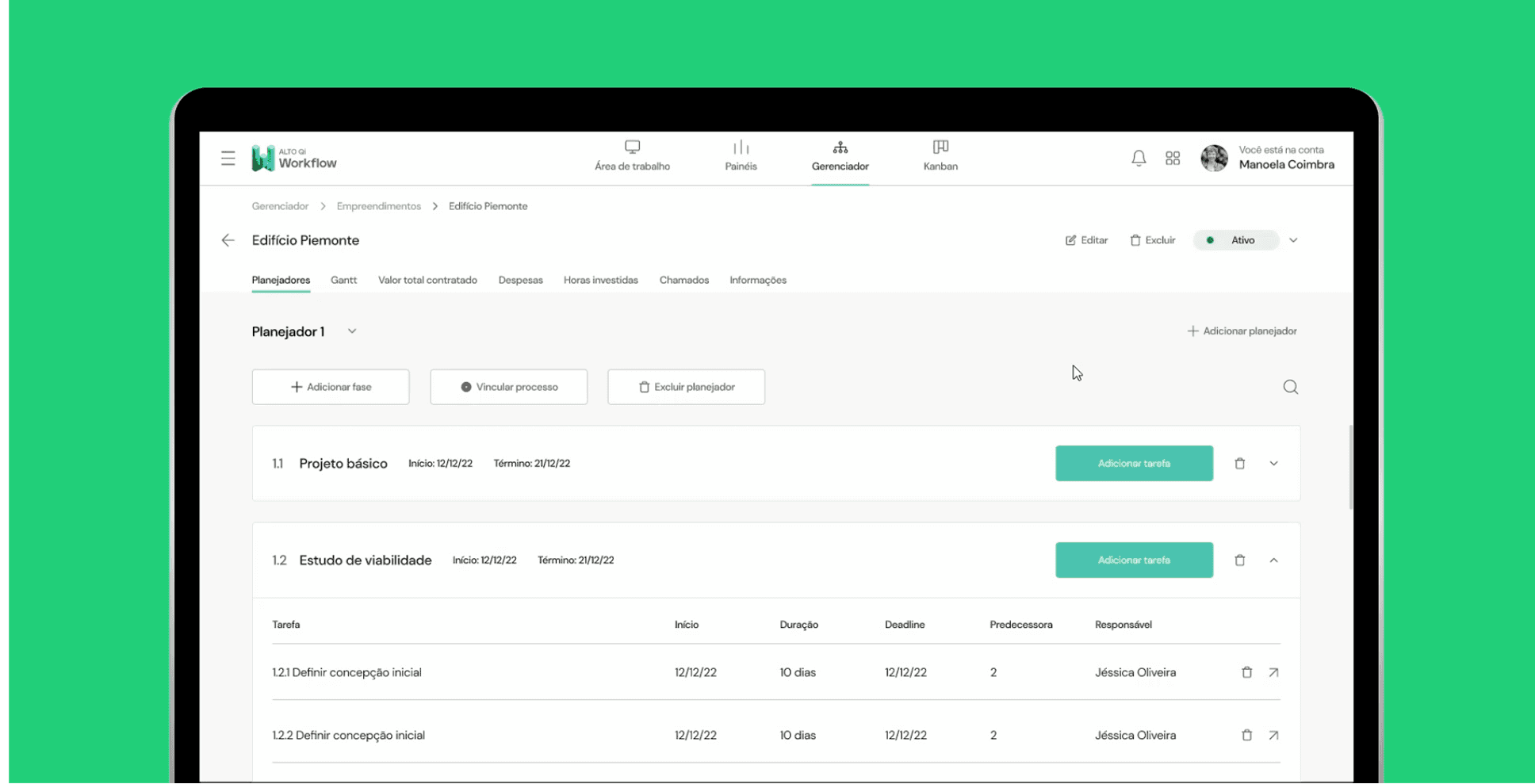
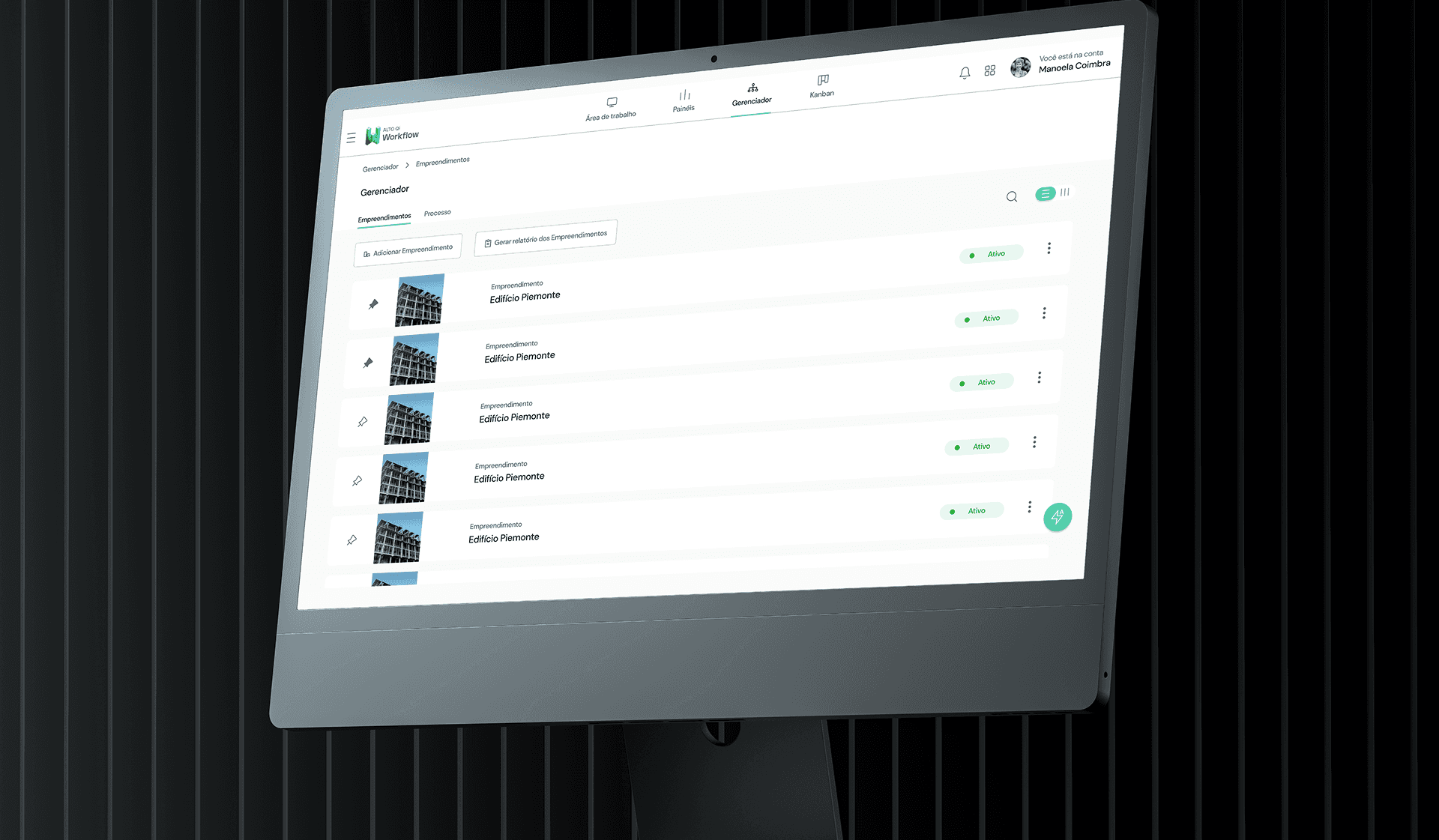
Workflow is an advanced task management tool designed for Civil Engineering professionals, featuring complex workflows, multiple user roles, and a strong reliance on deadlines, data, and organization.
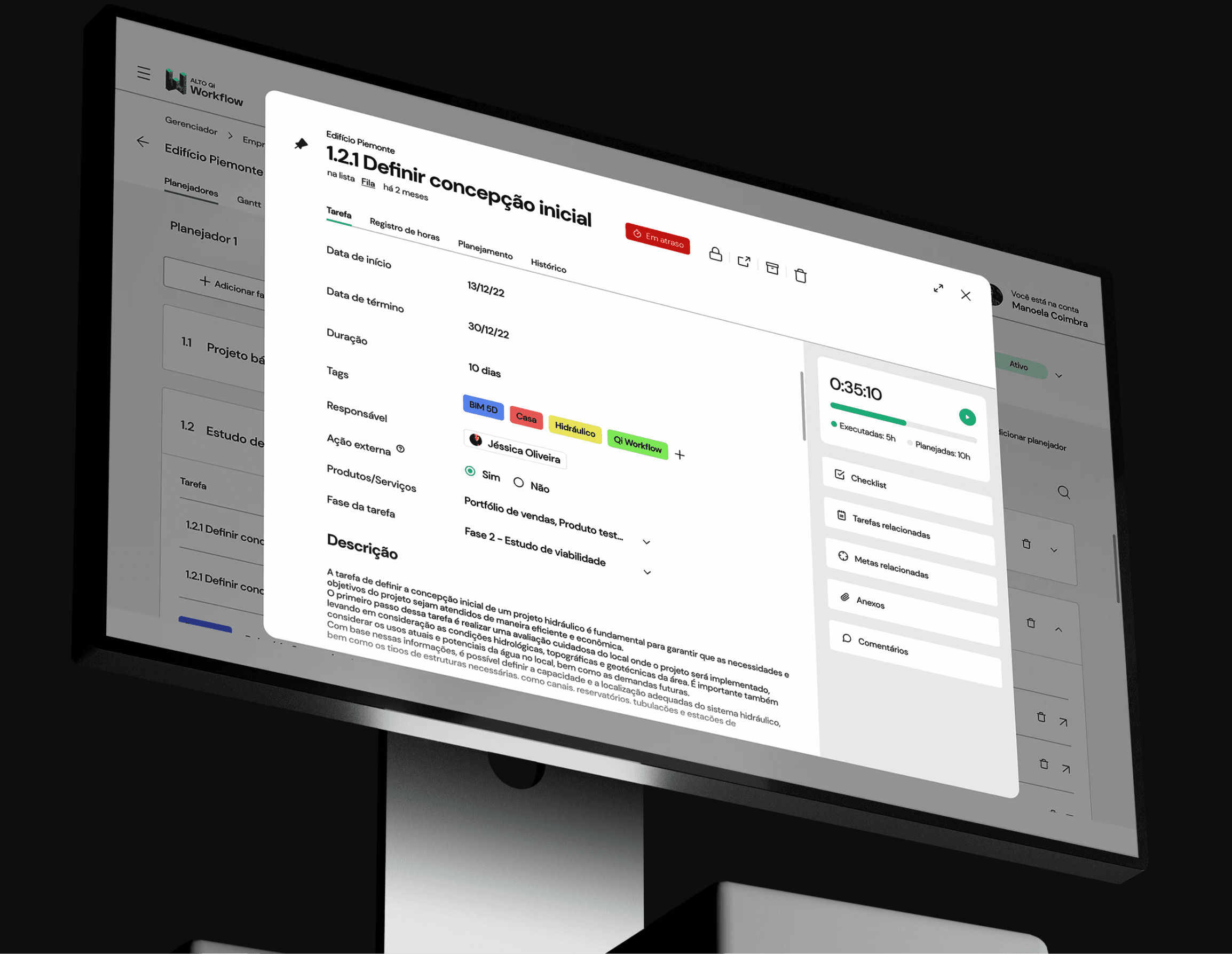
As part of the product evolution, it was necessary to validate the new task module—considered one of the most critical parts of the experience. The goal was not only to improve the interface, but to ensure the product was truly understandable, efficient, and usable in the daily routines of managers, designers, and technical teams, while respecting the complexity of the domain without overloading the user.
challenge and process.
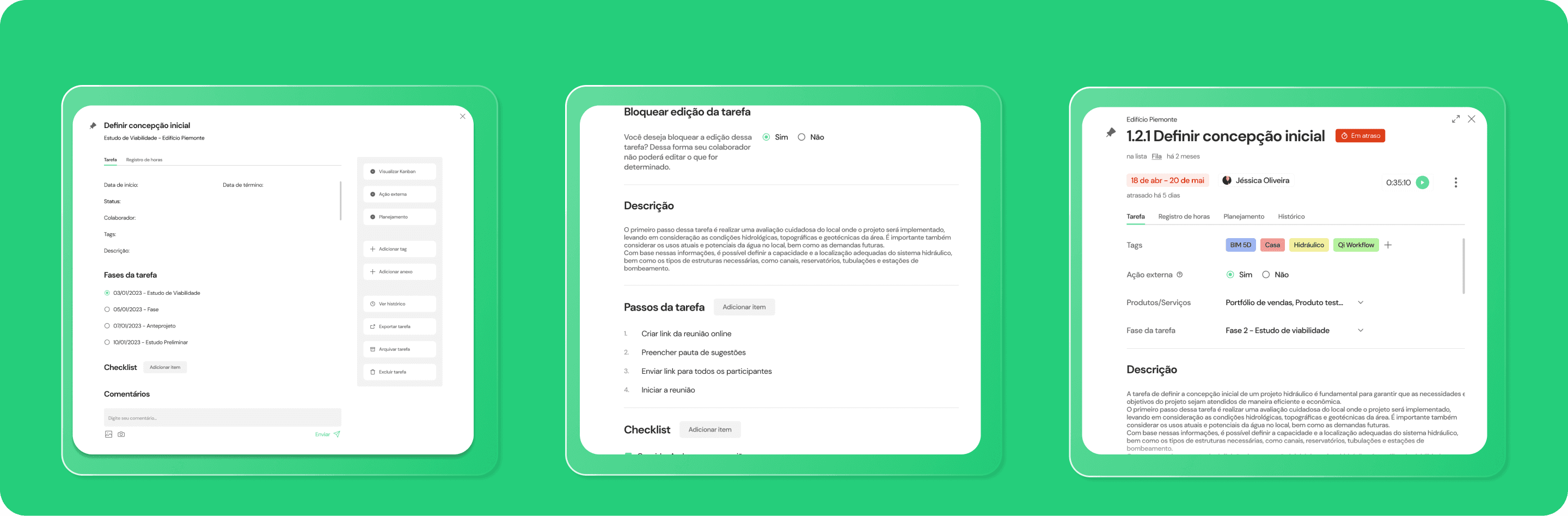
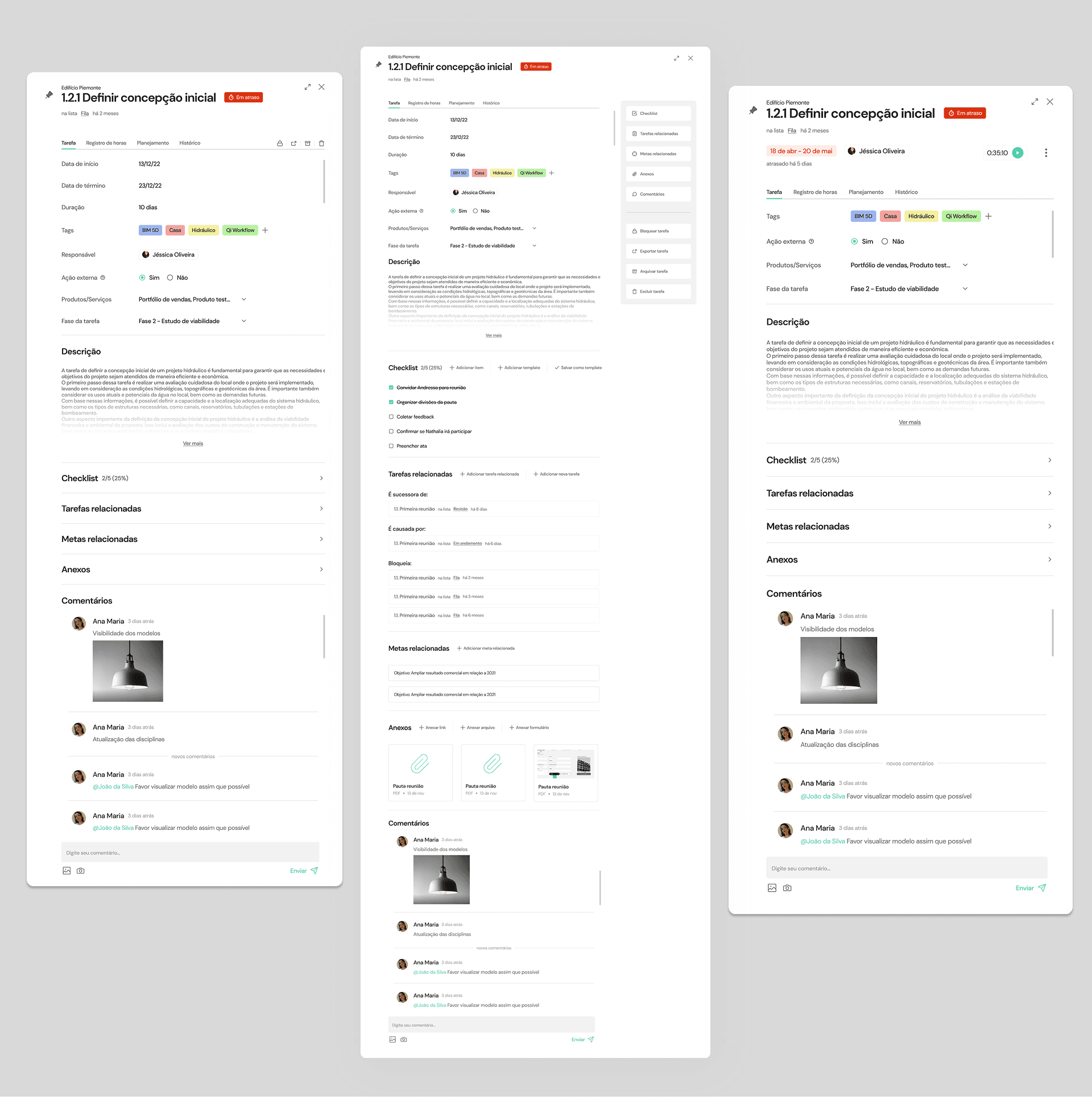
The central challenge was to validate, in practice, which interface solution delivered the best experience for different user profiles. The task module had three distinct versions of the same screen, each with different approaches to information organization, visual hierarchy, and interaction. It was essential to understand which version generated less cognitive friction, clearer actions, and better alignment with real workflows.
Additionally, the product served users with different levels of digital maturity, requiring extremely careful decisions to avoid ambiguity, confusing terminology, and loss of efficiency.
I led the entire usability testing process in a structured and strategic way. I started by clearly defining the test objectives, aligning with the product team on which hypotheses needed validation and which decisions would directly depend on the results.
The main objective was to validate which version:
generated less hesitation
provided clearer actions
enabled navigation without excessive scrolling
made critical information more visible
Based on this, I designed test scripts grounded in real tasks, simulating everyday user actions such as task creation, checklist usage, task relationships, attachments, edit locking, and reading critical information like deadlines, assignees, and time tracking.
The tests were conducted with real users across different profiles (managers, architects, and professionals already using or implementing Workflow for clients). During the sessions, I applied active listening, behavioral observation, and micro-interaction analysis—prioritizing what users did, not just what they said.
I observed patterns such as unexpected clicks, attempts at alternative actions, moments of hesitation, use of keyboard shortcuts, and difficulties in interpreting labels and interface states.
analysis and impact on the product.
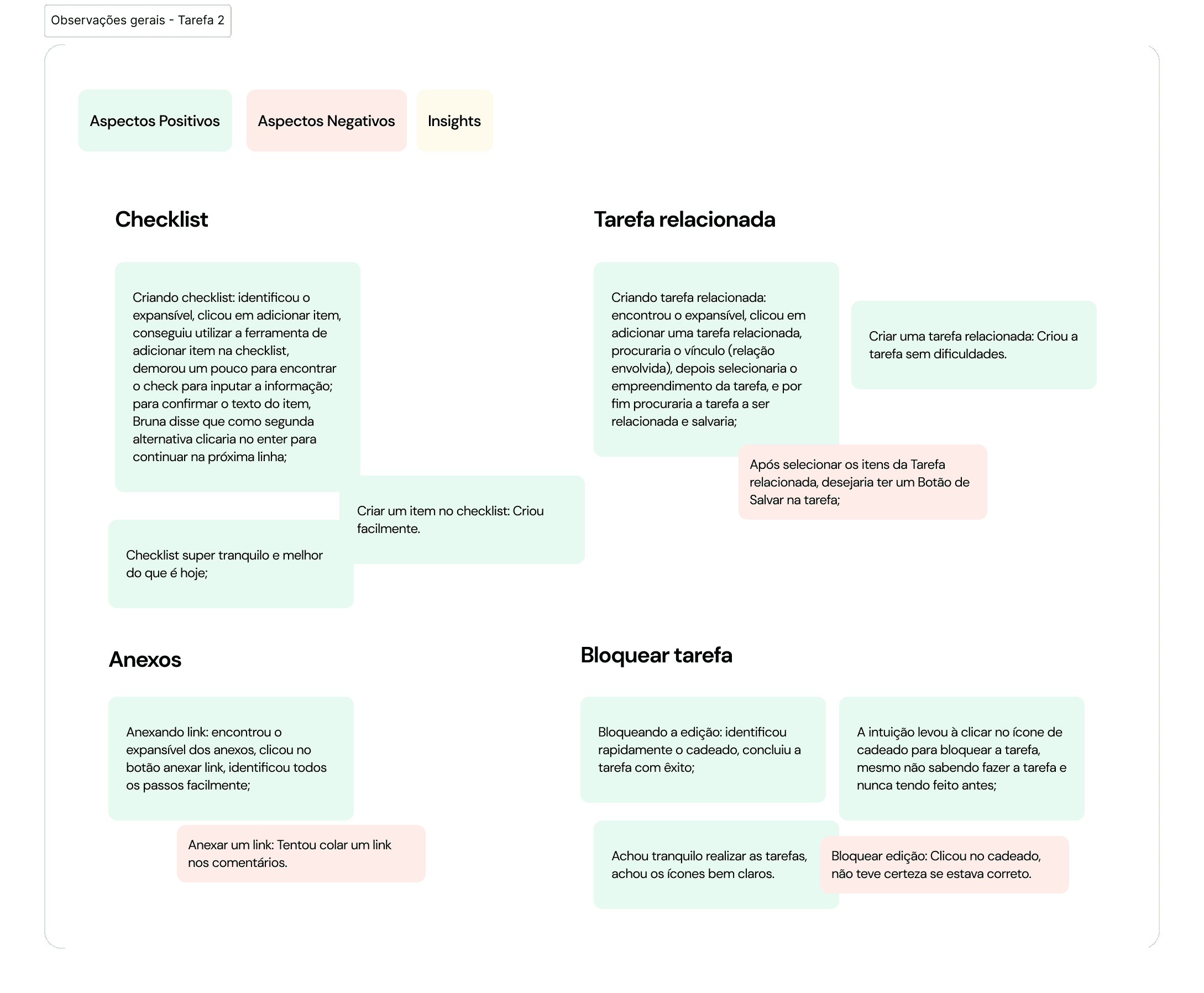
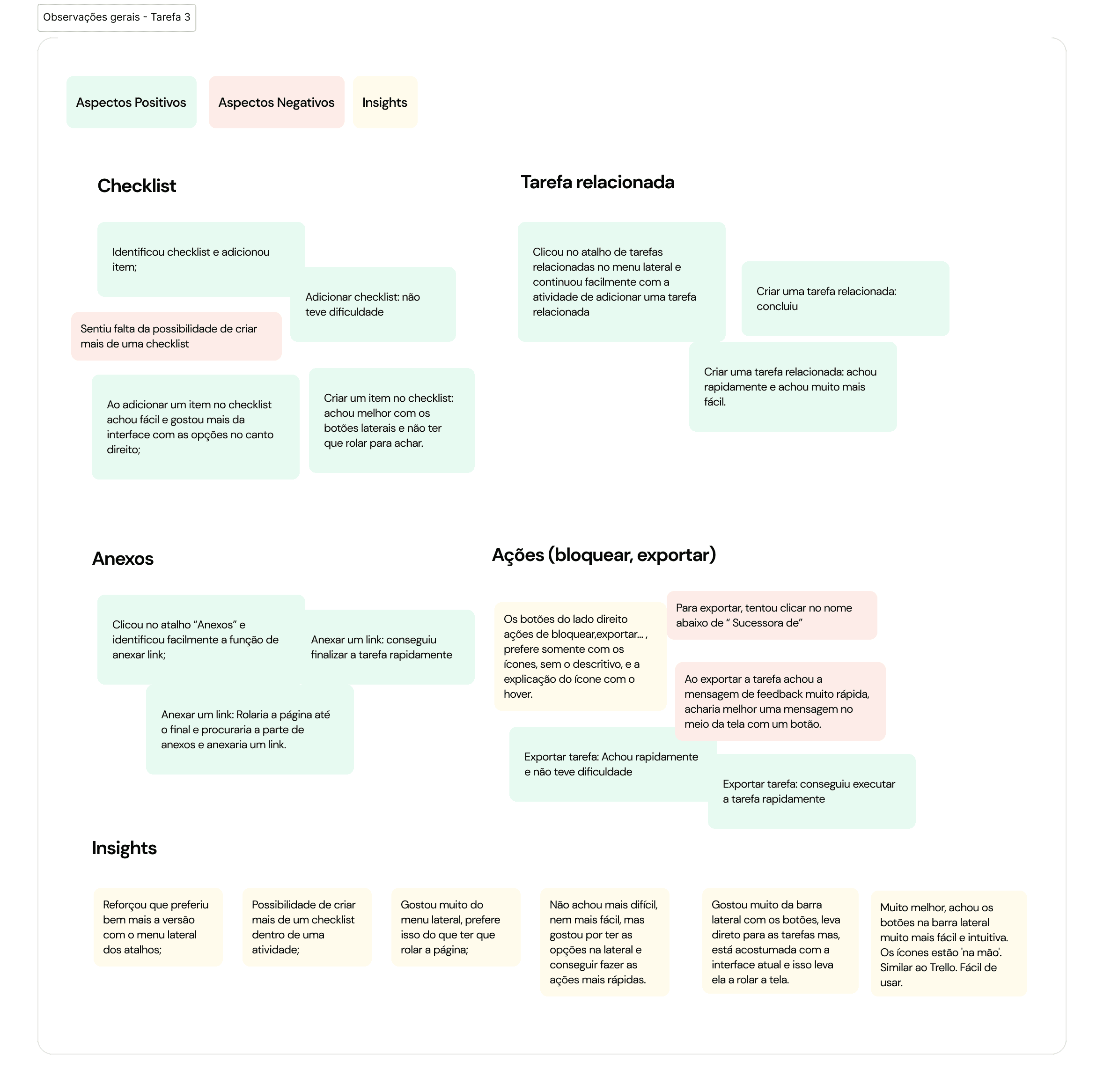
After the sessions, I consolidated the results into a deep qualitative analysis, turning observations into actionable insights. A total of 24 relevant insights were identified, revealing both strengths—such as the preference for side menus and visual shortcuts—and critical issues, including lack of clear feedback, difficulty identifying task status, and limitations in bulk creation and editing.
This stage was essential to separate opinion from evidence, prioritize real problems, and guide improvements based on impact for both users and the business.
Based on the tests, we:
refined the visual hierarchy
made critical actions more prominent
strengthened visual feedback
improved visibility of status and time tracking
adjusted the organization of information within the module
The test results directly influenced product decisions and interface adjustments in the task module. Through validation, we were able to refine information hierarchy, improve feedback mechanisms, reinforce key states and actions, and eliminate friction points that could hinder adoption.
The module evolved into a clearer, more intuitive experience, aligned with users’ mental models—reducing cognitive effort and increasing confidence in daily use.
Impact
The process enabled us to:
reduce interaction ambiguities
increase operational clarity
improve users’ sense of control
build a stronger foundation for product adoption
reduce rework
decrease code complexity
Would you like to learn more about this project?
Every project has its own particularities and experiences that can’t be fully explained on a single case study page. Send me a messages.
I’ll be happy to share more about it.
Contact
To learn more about me or about my projects, just get in touch and I’ll be happy to chat.
Copy Email