AREA
PRODUCT
PROJECT
FINAL GRADUATION PROJECT
ROLE
PRODUCT DESIGNER
YEAR
2024
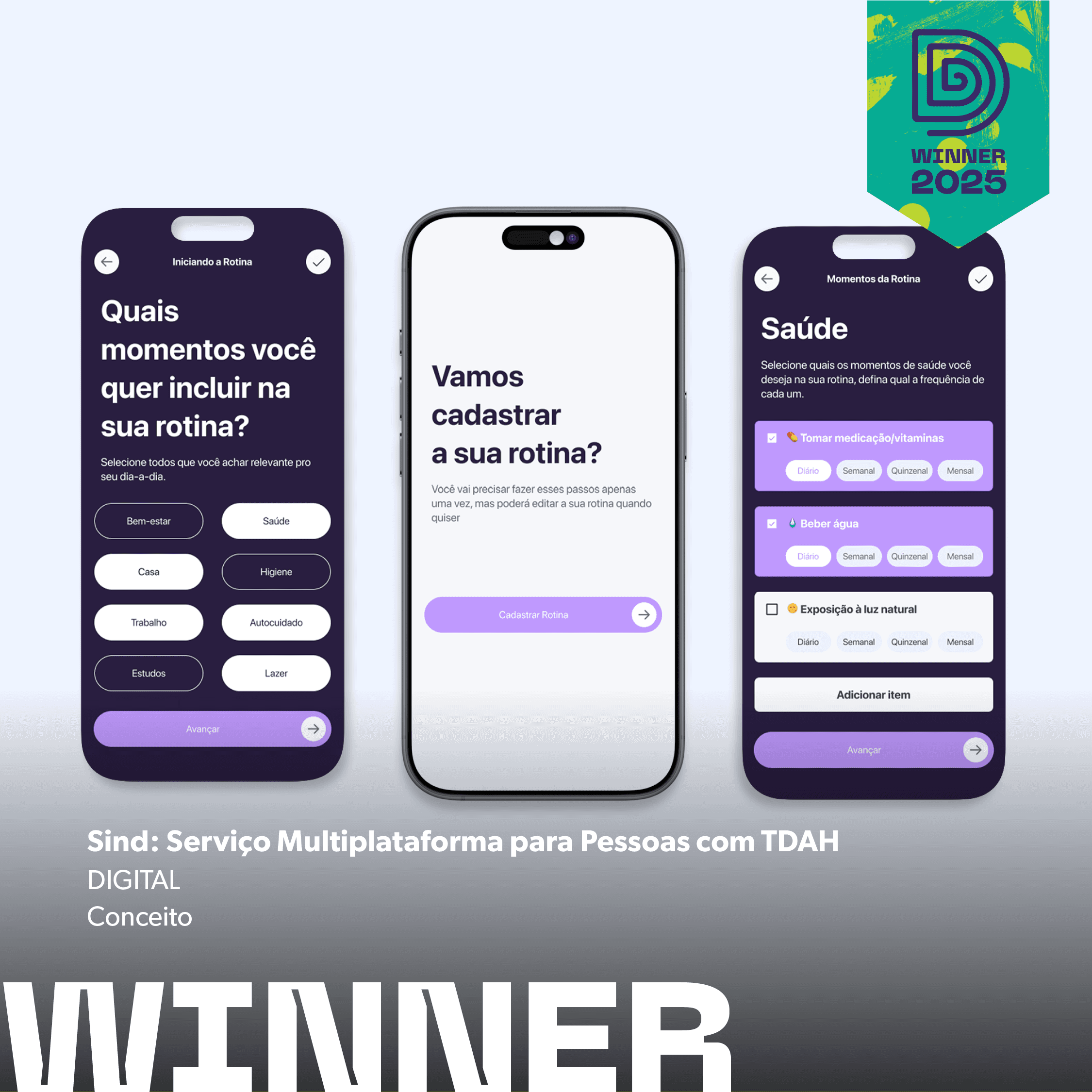
Sind – Platform for People with ADHD
about.
Recognition
Recognized by the Design for a Better World Award 2025 for proposing a digital solution focused on neurodivergent accessibility and social impact.
Starting Point
For many people, organization is a habit.
For others, it is a constant effort that is often impossible to sustain.
Attention Deficit Hyperactivity Disorder (ADHD), especially in its predominantly inattentive presentation, directly impacts executive functions responsible for:
organization
planning
memory
time management
This is not a lack of effort. It is a cognitive limitation.
Approximately 2.5% of adults live with the condition, and this number has been growing rapidly, with up to a 123% increase in late diagnoses over the past decade.
challenge.
The Real (and Invisible) Problem
Adults diagnosed with ADHD don’t just struggle with distraction — they face an entire system that wasn’t designed for them. In daily life, this translates into:
forgetting simple tasks
losing essential items (keys, documents, phone)
difficulty meeting deadlines
abandoning tasks that require sustained mental effort
constant failures in time management
Common situations, like leaving the house, can become challenging:
forgetting something important
losing focus midway through a task
being unable to finish what was started
The result is not just disorganization. It is:
constant frustration
a sense of inadequacy
impact on both professional and personal life
Market Failure
Despite the increase in diagnoses, most digital solutions:
do not account for real cognitive limitations
require consistency that users cannot sustain
add complexity instead of reducing it
There is also a clear gap: most solutions are designed for children, not for adults with late diagnoses.
Opportunity
If the problem lies in the difficulty of creating structure,
the solution cannot depend on it.
The guiding question for the project was:
How can we create an external structure capable of compensating for internal limitations?
Approach
The project was developed based on a combination of:
scientific literature review on ADHD and executive functions
interviews with diagnosed individuals
observation of real daily-life challenges
analysis of existing tools
Using a Research Through Design approach, where the design process itself becomes a tool for investigation.
The goal was not only to understand the problem, but to test how design could respond to it.
Key Insight
People with ADHD don’t need more tools — they need continuous, adaptable structure.
Something that:
reduces decision-making
anticipates forgetfulness
works across different contexts
supports the user throughout the day
solution.
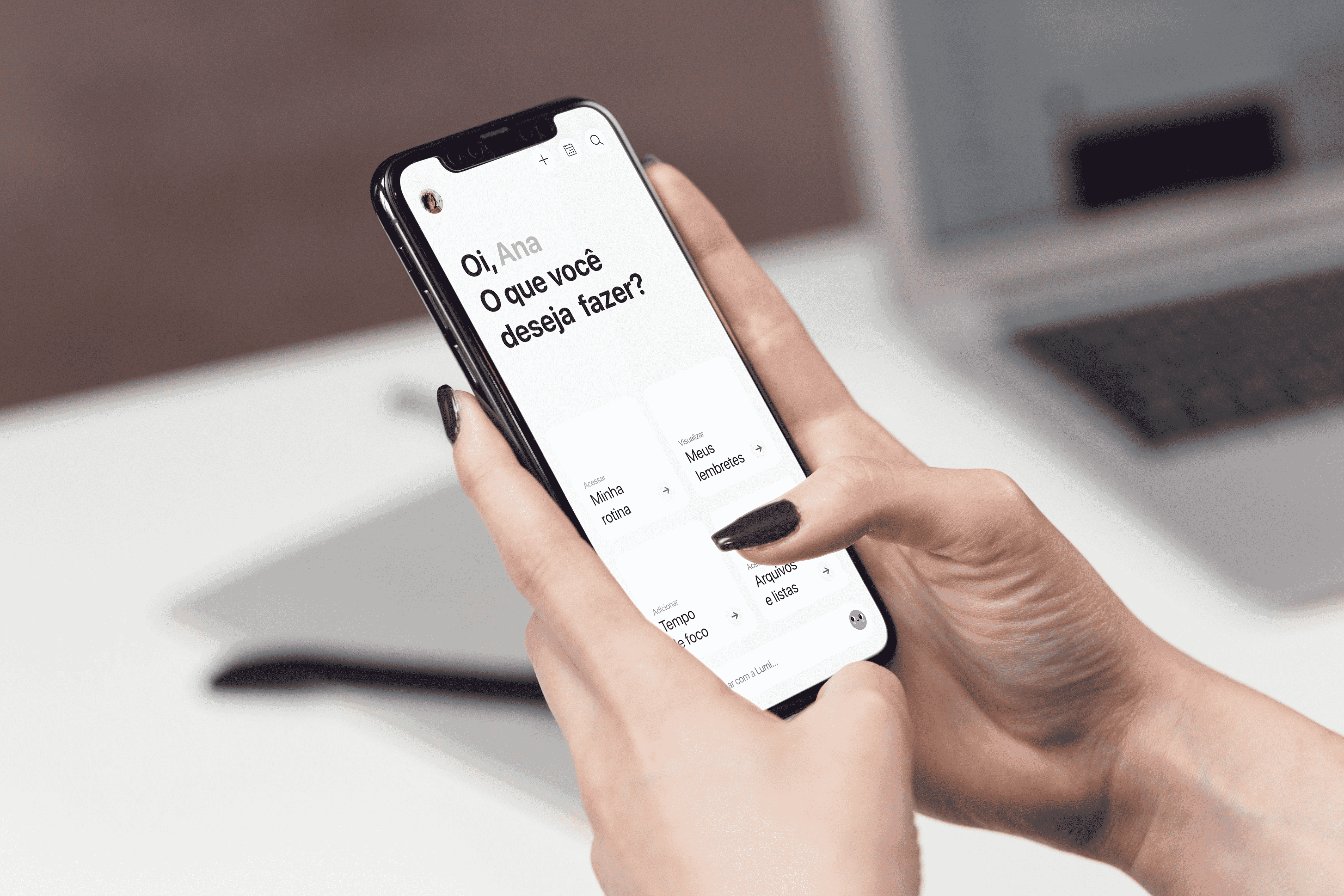
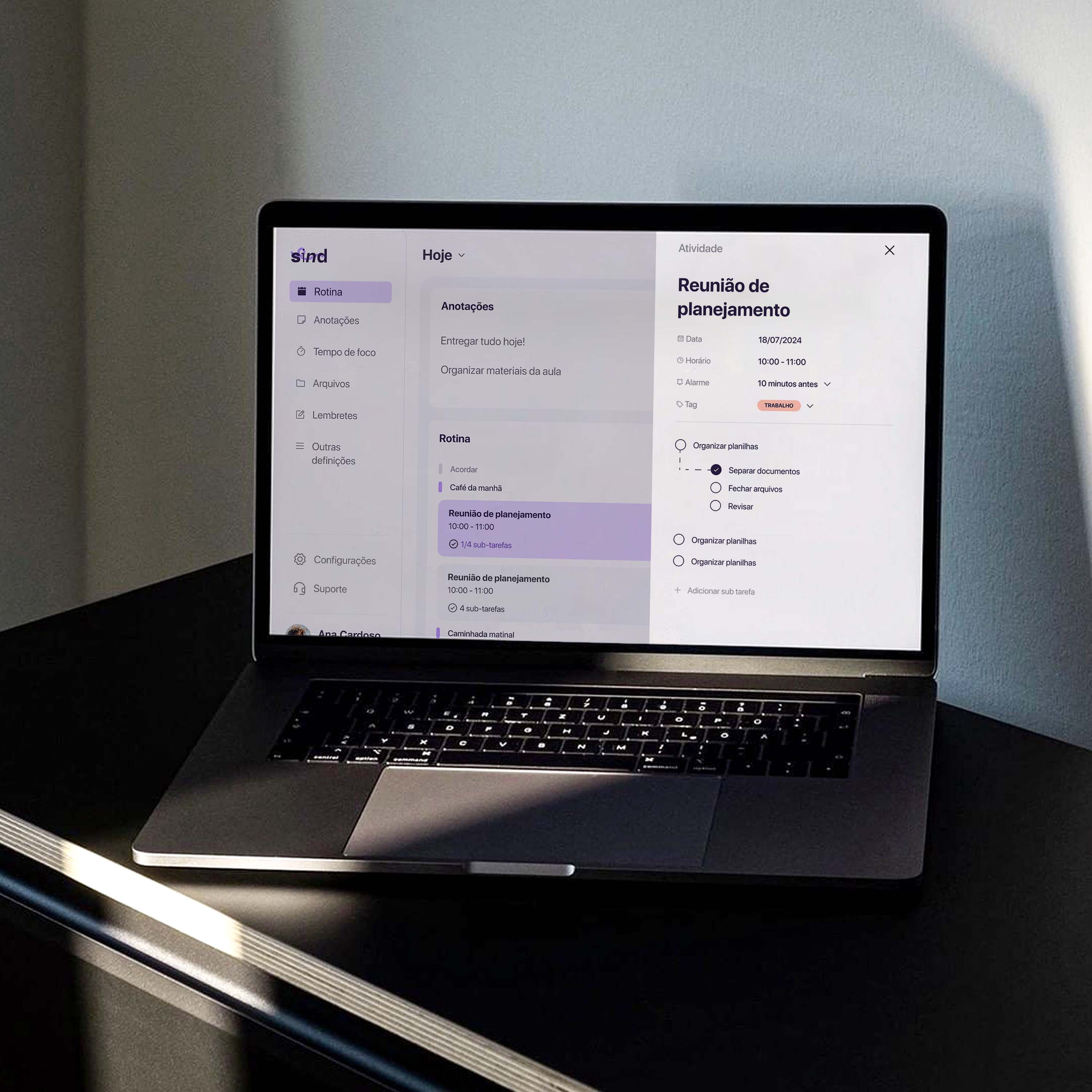
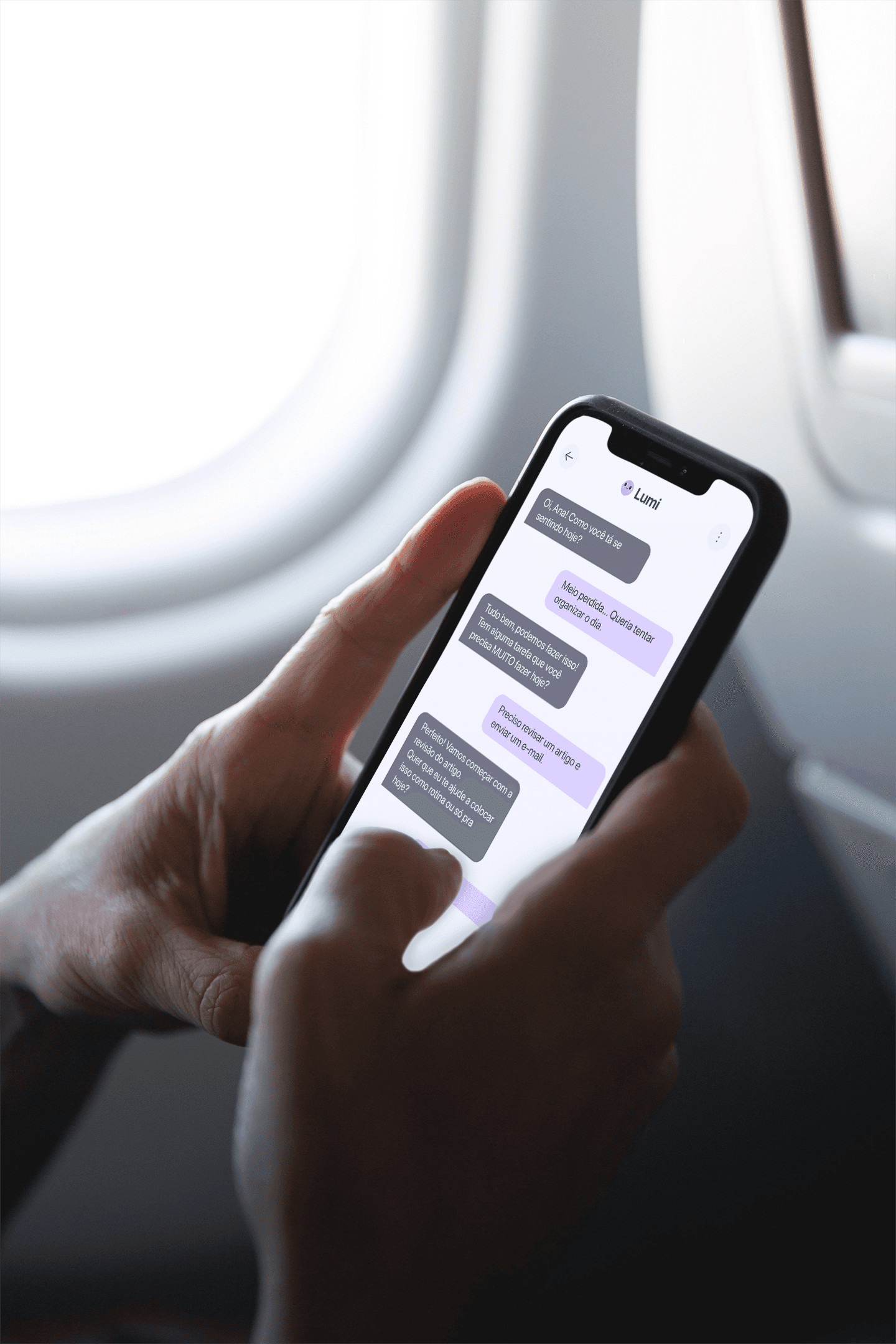
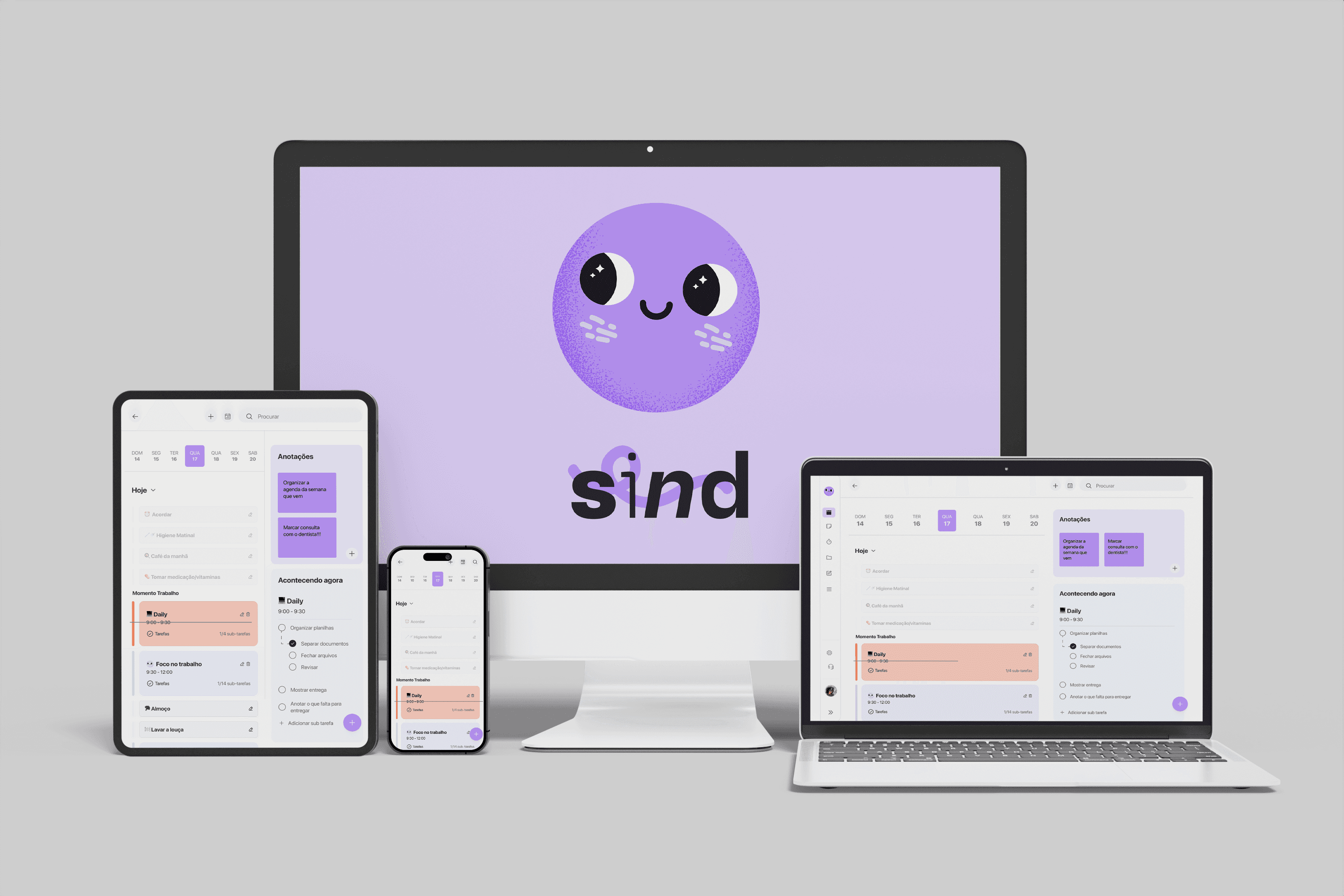
SIND was born as a multi-platform digital service designed to function as an extension of the user’s executive functions — a system that does not rely on user discipline to work.
Core Concept
Externalizing organization.
SIND acts as an external layer of cognitive support, helping users to:
organize tasks
maintain focus
remember commitments
structure routines
Multiplatform as Strategy
The service was designed to exist across different touchpoints in the user’s routine:
mobile
desktop
smartwatch
voice assistants
This allows the system to follow the user, rather than requiring the user to seek it out.
Product Decisions
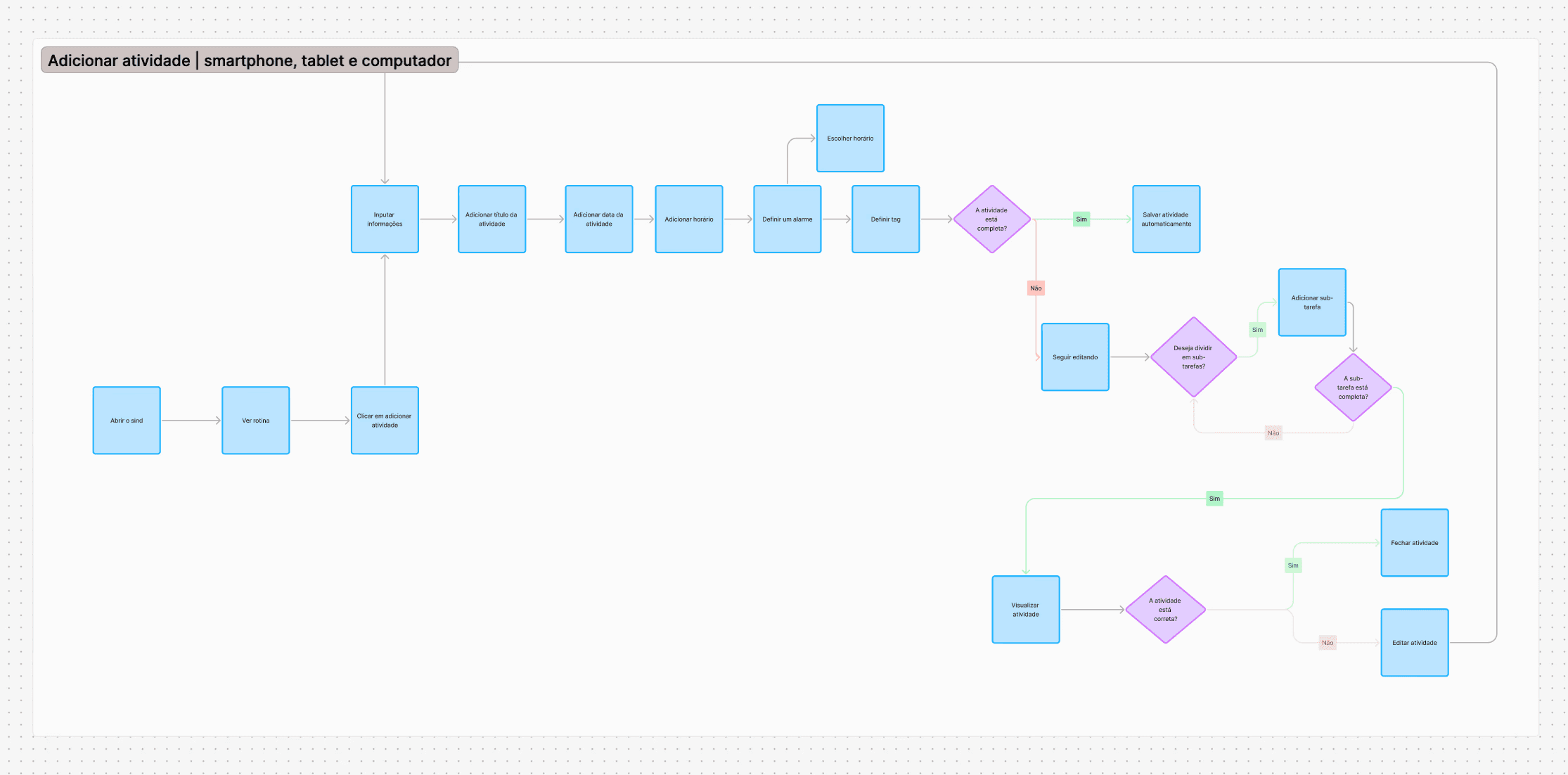
Minimize cognitive load as much as possible
Avoid complex or lengthy flows
Create fast and predictable interactions
Distribute the experience across devices
Prioritize continuity over habit dependency
Apply W3C guidelines with COGA to ensure cognitive accessibility
Each decision was guided by one question:
Does this make life easier or harder for someone with ADHD?
Expected Impact
SIND aims to:
reduce forgetfulness and daily failures
improve personal organization
increase autonomy
reduce mental overload
bring more predictability to daily routines
More than productivity, the focus is on quality of life.
Why the Project Was Awarded
The recognition came from its ability to:
address a real and underexplored problem
translate scientific knowledge into a practical solution
position neurodivergent accessibility as a core design principle
create a systemic solution, not just a functional one
deliver impact across innovation, design, environmental, and socio-economic dimensions
The project demonstrates how design can directly contribute to reducing invisible inequalities.
Key Learnings
Not every barrier is visible — but that doesn’t make it less significant
Design can compensate for real cognitive limitations
Accessibility is not an afterthought — it is the starting point

Would you like to learn more about this project?
Every project has its own particularities and experiences that can’t be fully explained on a single case study page. Send me a messages.
I’ll be happy to share more about it.
Contact
To learn more about me or about my projects, just get in touch and I’ll be happy to chat.
Copy Email