AREA
PRODUCT
PROJECT
BY DESIGN STUDIO
ROLE
MAIN PRODUCT DESIGNER
YEAR
2023
Discovery - Workflow
about.
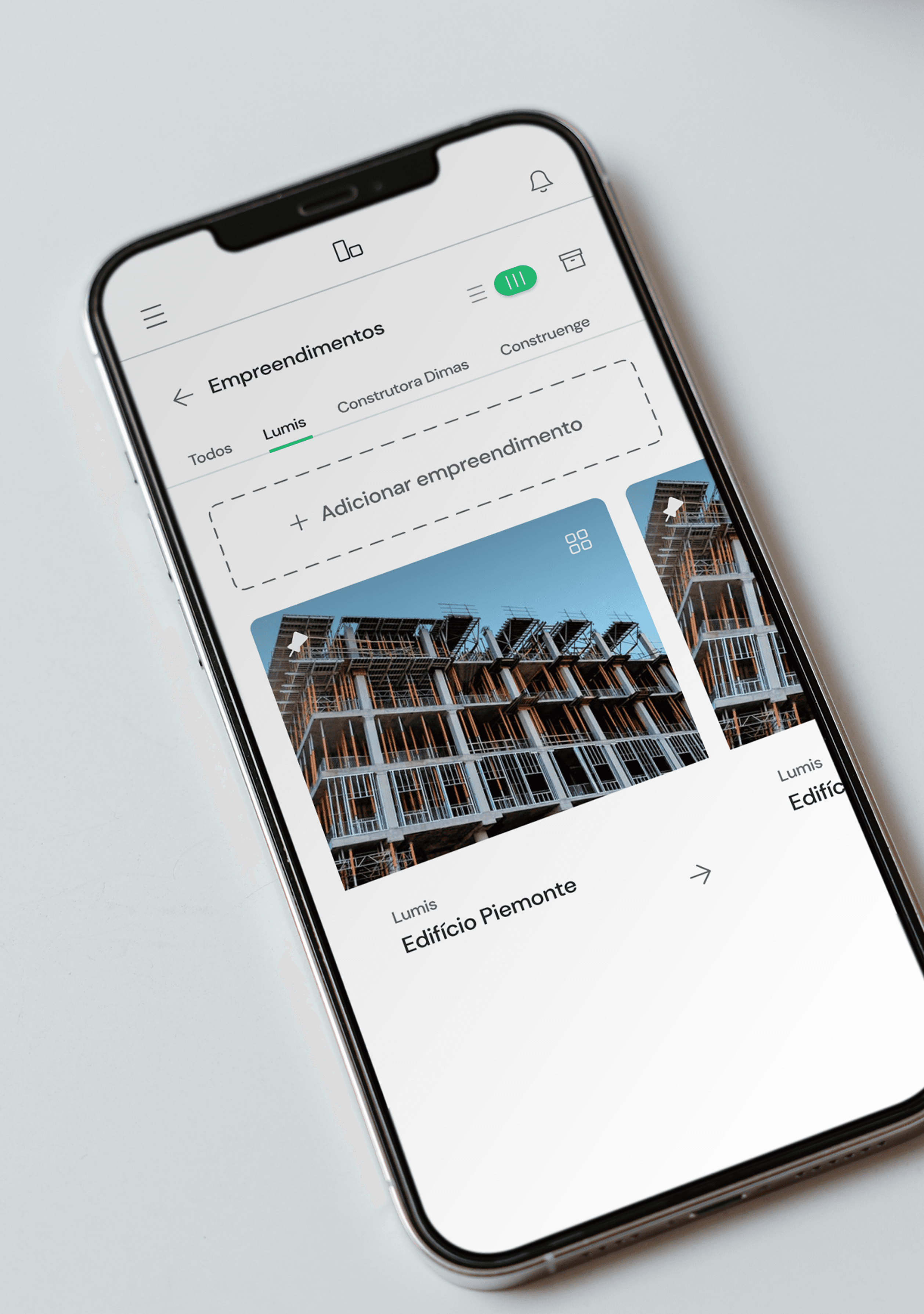
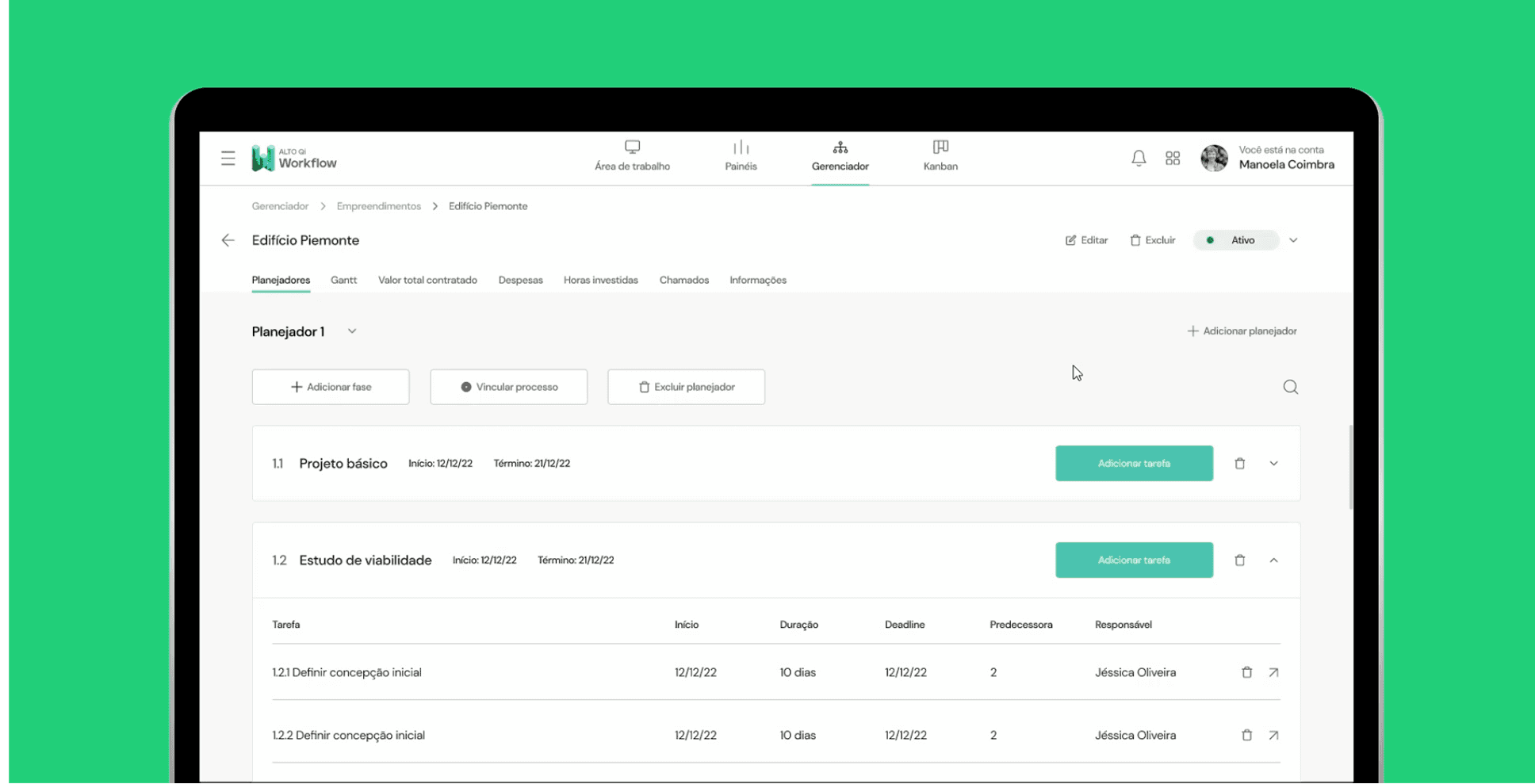
Workflow is a project management tool designed for engineering firms, focused on planning, deadline control, contracts, and tracked work hours. Despite offering a robust structure, there were signs of low full-platform adoption and parallel use of other tools such as Trello, Excel, and proprietary systems.
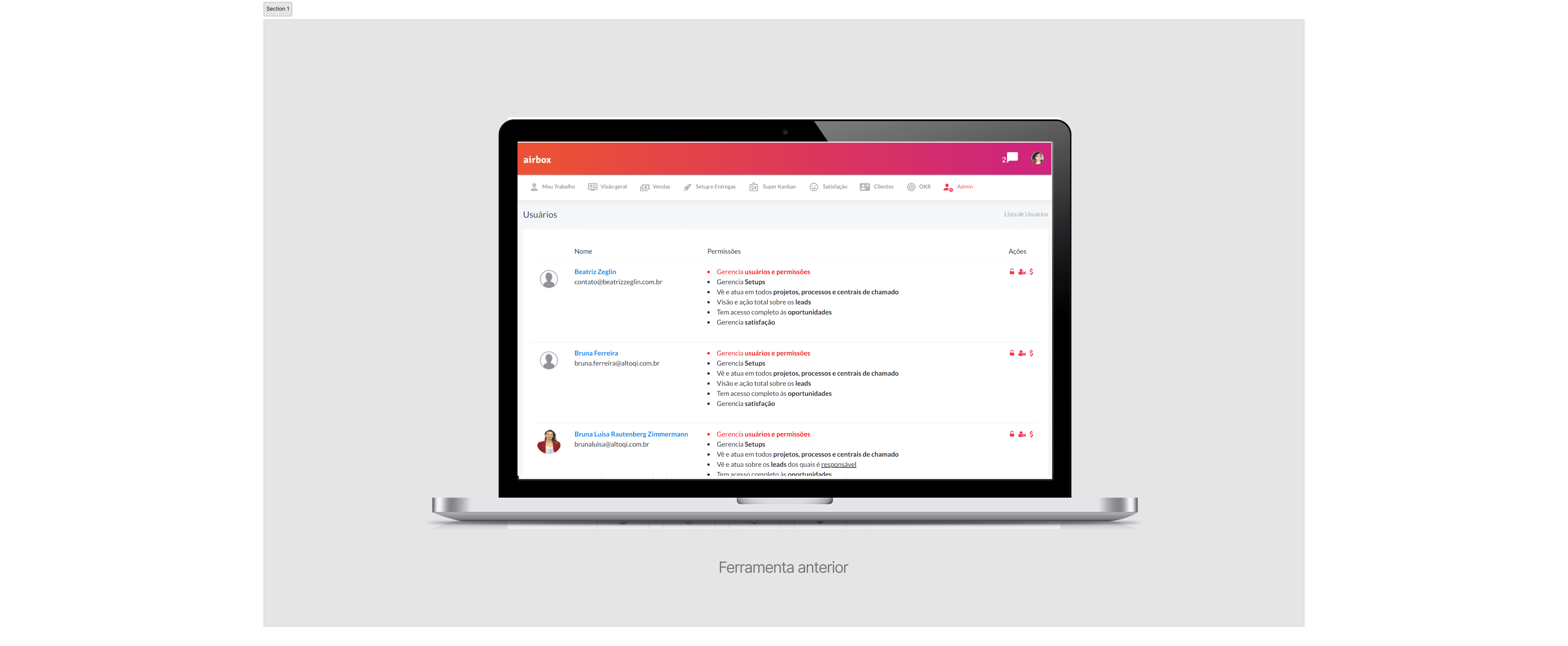
The platform’s design originated from another product acquired by the company. Therefore, the challenge was not only a redesign, but a complete product reformulation.
Before evolving the product, it was essential to deeply understand how users were managing their projects and where the main friction points existed.
Discovery Objectives:
Identify real pain points in project management
Understand how Workflow was actually being used in practice
Map gaps between expectations and real usage
Identify prioritizable improvement opportunities
process.
Qualitative research was conducted with different company profiles and users, including managers, architects, and technical teams.
The interviews explored:
How projects were managed before Workflow
Which modules were effectively used
Which features generated confusion or resistance
Which tasks required parallel tools
Which information was considered critical in daily operations
Based on the interviews, insights were organized into pain clusters, recurring patterns, and product opportunities.
Initial findings indicated:
Difficulty visualizing active contracts, ongoing projects, and critical deadlines
Dependence on spreadsheets for managerial oversight
Complexity in understanding system terminology and structure
Partial use of the tool
Resistance to adoption from teams accustomed to other solutions
The challenge was not to add more features, but to understand why, even with available resources, users still relied on external tools.
key findings and impact.
Lack of managerial overview: Managers struggled to obtain a quick and consolidated view of active contracts, ongoing projects, and overdue deadlines. This limitation led them to rely on Excel for strategic control.
Time as the primary asset: Time tracking was a central need. Users wanted to monitor estimated hours, actual hours, and duration per milestone. Since time represents the main operational cost, any inaccuracy directly impacted trust in the tool.
Structural and terminology complexity: Terms such as “milestones” and “project portfolio” were not intuitive for all users. There was difficulty understanding the relationship between setup, kanban, and milestones, indicating misalignment between the system architecture and users’ mental models.
Parallel tool usage: Even while using Workflow, companies continued relying on Trello, Excel, and WhatsApp for support. This suggested that the product was not fully integrated into the real workflow or did not convey enough clarity to replace already established tools.
Scalability challenges: Companies managing a high volume of tasks reported difficulties with filters and bulk editing. This revealed scalability issues in more complex operational scenarios.
The Workflow Discovery revealed that the product’s main challenge was not the absence of features, but the misalignment between the system’s structure and users’ mental models. Managers sought a clear macro view of contracts and projects, while designers and technical teams prioritized task organization and time control. When this information was not visible or consolidated, a gap emerged in the product, leading to complementary use of tools like Excel and Trello. Semantic and structural complexities were also identified, with non-intuitive terminology and organization that demanded unnecessary cognitive effort.
Based on these findings, product priorities were redefined to strengthen managerial visibility, give prominence to time-related metrics, and simplify information architecture. The impact was strategic: instead of expanding functionality, efforts were directed toward clarity, organization, and alignment with real workflows, reducing assumption-based decisions and increasing confidence in the product’s evolution.
Would you like to learn more about this project?
Every project has its own particularities and experiences that can’t be fully explained on a single case study page. Send me a messages.
I’ll be happy to share more about it.
Contact
To learn more about me or about my projects, just get in touch and I’ll be happy to chat.
Copy Email